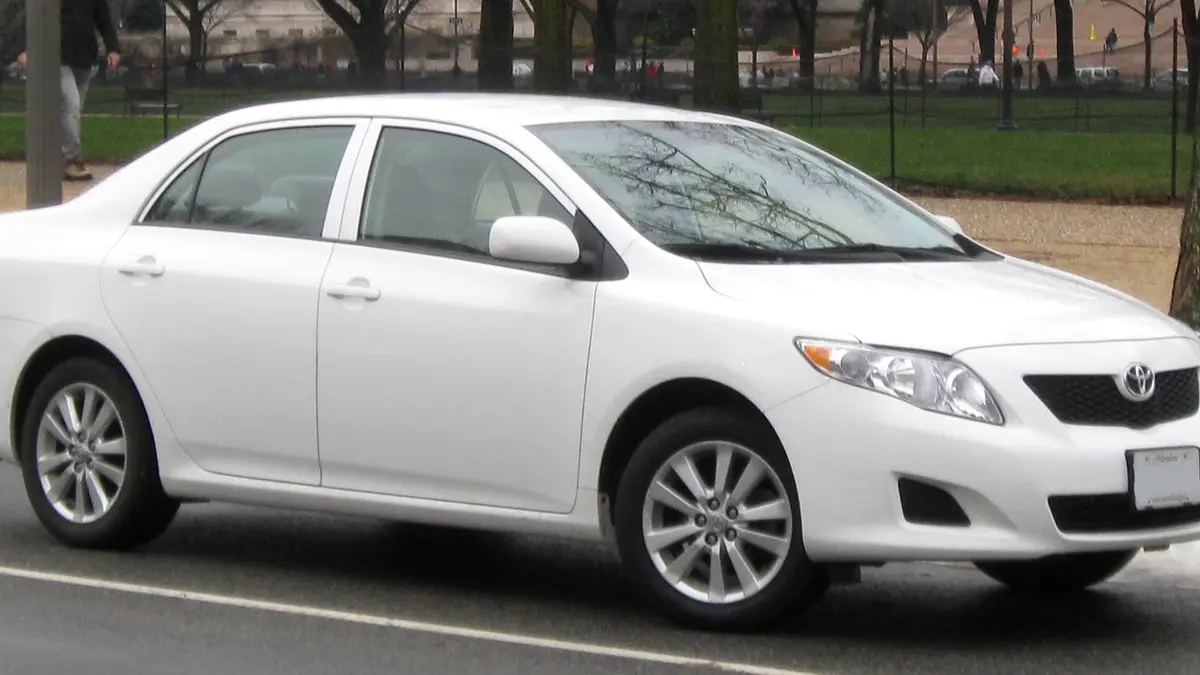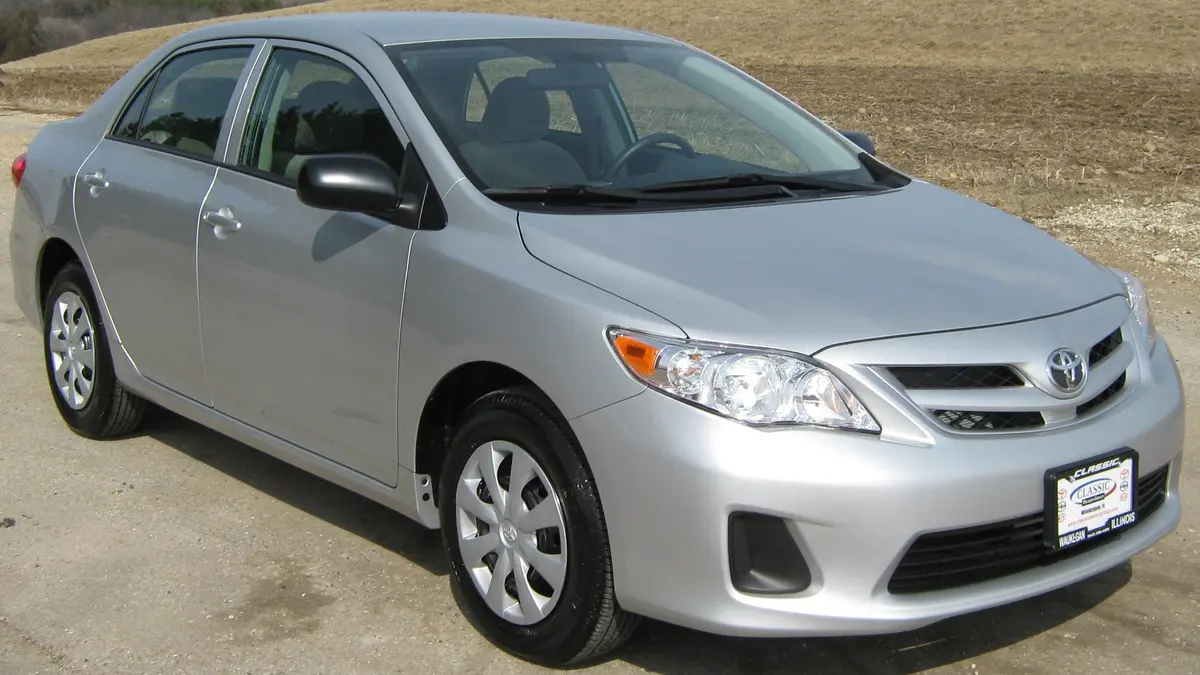
If you are searching for a Toyota Corolla for sale in Nigeria, you have probably already been told to buy one. By your brother, by a mechanic, by whoever sold you their old one. It is the most recommended car in this country and the advice is almost always right.
What nobody tells you is which one to buy. There is a Corolla at four million naira and a Corolla at twenty million, they look more alike than the price suggests, and the gap between a good one and a tired one is mostly invisible from the outside.
So here is the version that helps you choose, built off the 427 Corollas currently advertised on CarSpace.
Why everybody keeps telling you to buy one
It is not about how it drives. Nobody buys a Corolla for the driving.
You buy it because of what happens afterwards. Every mechanic in this country has worked on one. Every parts shop from Ladipo to your junction has the filters, the bushes, the brake pads, and they have them today, not next week. You will never be told that a part is coming from Lagos and to call back on Thursday.
That single fact changes ownership completely. A fault on a rare car is an event, with waiting and guessing and a mechanic learning on your money. A fault on a Corolla is an afternoon.
Then it shows up again when you sell. The next buyer wants it for exactly the reason you did, so it moves quickly and it holds its price. People call that reliability. It is really just popularity compounding.
Against its own family, the Corolla is the sensible younger sibling. It usually asks about a million naira less than the equivalent Camry, costs less to fuel, and does ninety percent of the same job. If you are buying a car to get to work rather than to be seen arriving, this is the one.
Which years are worth your money
Three eras matter here, and most readers should be shopping in the middle one.
2003 to 2008: the cheap way in
This is the biggest slice of what is advertised, and Nigerian-used ones mostly sit around ₦4.6 million. If your budget is firm and you need a car that starts every morning, this is a perfectly honest purchase.
Go in knowing you are buying age. Suspension, bushes and shocks will have taken fifteen years of our roads, the air conditioning may be tired, and you should budget to spend on it in the first few months rather than hoping you got the one that needs nothing. You did not.
2009 to 2013: where most people should be looking
The sweet spot, and the one I would point almost anyone at. Nigerian-used examples usually ask around ₦7 million, tokunbo a little more. Old enough that the price has come down to earth, new enough that nothing major is automatically overdue.
The 2010 in particular is the single most-advertised Corolla year in the country. That is worth something real to you: when there are seventy of a thing on the market, you can walk away from a bad one without feeling you have lost your chance. There is always another 2010 Corolla. Use that.
2014 and newer: think before you stretch
From 2014 the price steps up sharply, to around ₦11 million and then well past twenty for the recent ones, and the car you get is better but not twice as good.
There is also a mechanical reason to pause here, and it is the most useful thing in this article. Many of these later cars use a CVT gearbox rather than the older conventional automatic. The old box was close to unkillable and any roadside mechanic could handle it. A CVT is a different conversation: fewer people here are confident working on one, and a bad one costs serious money. If you are buying 2014 or newer, ask what gearbox it has and have your mechanic drive it properly before you commit.
What it costs you after you buy
The price is the smaller half of the decision. Here is what the next three years look like, which is where the Corolla earns its reputation.
- Fuel. The cheapest part of owning one. A 1.8 Corolla sips compared to anything with an SUV badge, and on Lagos traffic that difference compounds every single week.
- Servicing. Routine and cheap. Oil, filters, plugs, and no diagnostic drama because every mechanic knows the car by heart. You are paying for labour, not for somebody's education.
- Suspension. This is your real recurring cost, and it is our roads rather than the car. Bushes, links and shocks will need attention, especially on the older ones. Budget for it yearly instead of being surprised by it.
- Air conditioning. The thing most likely to annoy you. Compressors and gassing are a known expense on the older cars, so test it properly before you buy rather than after.
- Resale. The quiet one people forget. You will get your money back faster and more completely than on almost anything else at this price, which makes the true cost of three years lower than the sticker suggests.
Add it up and the Corolla is rarely the cheapest car to buy in its bracket. It is very often the cheapest to have owned.
Buy your Corolla in Lagos
This is the part that will save you the most money, and it runs against what people assume.
Most Corollas advertised in Nigeria are in Abuja. But a Nigerian-used Corolla in Lagos typically asks around ₦3.9 million, while the same grade in Abuja is closer to ₦6.5 million. That is a serious gap on a car at this price, and it is the opposite of how the two cities price most other things.
The reason is supply of a particular kind. Lagos is full of private individuals who bought a Corolla years ago, drove it themselves, and are now selling it one at a time. Abuja is more of a dealer and import town, and dealer stock carries dealer pricing.
So if you want a Nigerian-used Corolla and you can get to Lagos, start there. Our Lagos buying guide covers which areas are worth your Saturday, and the guide to spotting honest Nigerian-used cars matters more on a car this old than on anything newer.
What actually goes wrong
No car is faultless and pretending otherwise helps nobody. The Corolla's problems are well known, which is itself an advantage, because a known problem has a known price.
- Oil consumption on the older engines. The 2003 to 2008 cars are the ones people complain about. Some of them drink oil quietly between services. Check the dipstick yourself, ask the owner how often they top it up, and treat a vague answer as an answer.
- Suspension noise. Knocking over potholes is the most common complaint here and usually bushes rather than anything serious. Cheap to fix, but price it into your offer.
- Air conditioning. Run it for a full ten minutes, not two. Plenty blow cold briefly and give up.
- Clocked odometers. Very common on a car this popular. The mileage on the dash is a claim, not a fact. Judge age by the brake pedal rubber, the driver's seat bolster and the steering wheel shine instead.
- The CVT on later cars. Covered above, and the one fault that can genuinely hurt. Older conventional automatics are the safer buy if you are unsure.
Nigerian used or tokunbo?
On a Corolla specifically, this is a closer call than usual.
Tokunbo Corollas ask roughly ₦6 million to ₦13.5 million against Nigerian-used at ₦4.3 million to ₦7.5 million. The premium is real but it is nothing like the three-to-one gap you see across the market generally, because the Corolla is cheap enough that the shipping and duty weigh heavier in proportion.
Which way to lean comes down to what you can verify. A Nigerian-used Corolla lets you meet the owner, meet their mechanic, and build a picture. A tokunbo one gives you a probably-younger car with a history you can check by VIN before you ever travel to see it. Both are good routes. Buying either one blind is the mistake.
If you would rather skip the dealer markup entirely, our no-middleman guide explains how to find the private sellers, and there are a lot of them on this particular car.
Before you pay
Nothing here is Corolla-specific. It is just the list people skip when the car feels like a safe choice, and feeling safe is exactly when buyers get careless.
- See the car cold. If it is warm when you arrive, come back another day.
- Bring your own mechanic. Not theirs, not the man at the gate.
- Drive it properly, including reverse and a stretch of bad road.
- Match the chassis number on the car to the one on the papers yourself, not from a photo.
- See three before you offer on one. On a Corolla that is easy, so there is no excuse.
The full inspection and paperwork routine is in our 2026 buyer's playbook, and it applies here unchanged.
So, should you buy one?
If you want a car you can stop thinking about, yes. That is the whole case, and it is a strong one.
Aim at 2009 to 2013, shop in Lagos if you are buying Nigerian used, check the gearbox if you are tempted by something newer, and remember that the market is deep enough that no single car is worth overpaying for.
Start with Toyota Corolla listings, or browse Nigerian-used cars and tokunbo more widely if you are still deciding. And if the Corolla you already own is the one you are ready to move on from, list it. There is a queue of people looking for exactly it.