Anybody shopping for Nigerian used cars for sale in Lagos is really asking one question, and it has nothing to do with price. It is: what is wrong with this one?
Usually something is. Not fatally, not always expensively, but a car that has spent its whole life on Lagos roads has a history and the advert is not going to volunteer it. Your job is to work out what that history was before you pay for it.
Some of the clues are in the listing itself, and we can show you those, because we can see what the 572 Nigerian-used cars currently advertised in Lagos actually say. The rest are on the car and take about ten minutes if you know where to look.
First, the words sellers use
Worth settling early, because people throw these around loosely and the difference costs money.
Nigerian used means the car has been registered and driven here. Nigerian roads, Nigerian fuel, Nigerian mechanics, and possibly a Nigerian accident nobody mentioned.
Tokunbo means imported used, normally from America, Canada or Europe. A completely different risk profile.
Fairly used means nothing at all. It is a selling phrase, not a condition. When you see fairly used cars for sale in Nigeria Lagos adverts, read it as "used" and ask the same questions you were going to ask anyway.
The real advantage of a properly Nigerian-used car is that its history can be checked. You can meet the owner, see the papers, speak to the mechanic who has been servicing it. That beats an import whose first five years are a blank page, and it is the thing you are actually paying for.
What they cost
Locally used cars are the smaller half of the Lagos market, 572 against roughly 964 imports, and most ask somewhere between ₦5 million and ₦14.5 million.
Age drives that far more than brand does. A car from the early 2000s through to 2008 will usually be ₦3.5 million to ₦7 million. Something from 2009 to 2013 climbs to around ₦7 million to ₦14 million. Push into 2014 and later and you are looking at ₦14 million upwards, often well past ₦30 million.
Where the stock sits is the useful part. Nearly seven in ten Nigerian-used cars in Lagos are 2013 or older, so if you are shopping this end of the market you are mostly looking at cars at least twelve years old, whatever the photographs suggest. Anything from 2019 onwards is genuinely rare, barely two dozen in the whole city, which is why a young one advertised cheap deserves more suspicion rather than less.
The odometer problem
This is the part worth slowing down for, because it is the clearest thing the adverts give away and almost nobody says it out loud.
Of those 572 cars, 440 do not state a mileage at all. The field is simply left blank. That is more than three quarters of them.
The practical bit first: a listing with no mileage is not hiding anything unusual. It is normal here. Do not write a car off for it. Just understand the number has to come from somewhere before you buy, and that somewhere is the dashboard, in person.
Now the odd part. Among the 132 that do give a figure, the numbers do not behave like real ones. Cars built between 2000 and 2008 are claiming around 102,000 km. Cars built between 2009 and 2013, a good five to ten years younger, are claiming about 95,000 km.
The older group is claiming more distance than the newer group, but only by about seven percent. If these readings were honest you would expect a far wider gap than that.
Two fair caveats. Not many cars give a figure at all, so treat this as a strong hint rather than proof. And a fair chunk of it is probably guesswork rather than dishonesty, because plenty of sellers type a round number when they genuinely do not know.
Either way the conclusion holds. Mileage is the least reliable number attached to a car in this market. Do not price off it, do not negotiate off it, and never let a low reading talk you out of an inspection.
Work out the real age with your hands
Four things that are much harder to fake than a dashboard:
- The brake pedal rubber. Worn smooth, or suspiciously new, on a car claiming 60,000 km is a contradiction. Fastest check there is.
- The steering wheel and gear lever. Shine on the rim where hands sit, and a worn-through finish on the shifter, cost real money to put right so they rarely get touched.
- The driver's seat bolster. That outer edge collapses from people sliding in and out. It wears by use, not by sitting parked.
- Brand new pedal rubbers in a tired interior. Somebody prepared this car for sale. Ask what else they prepared.
Flood damage, the Lagos speciality
Every city has wound-back odometers. Lagos has water, every rainy season, in the same streets, and a car that sat in it often appears for sale shortly afterwards looking perfectly respectable.
This matters more than accident damage because it does not announce itself and it does not stop. Water gets into connectors and wiring and corrodes them quietly for a year before the electrics start misbehaving, by which point the car is yours.
Check in this order:
- Lift the boot carpet and take out the spare wheel. The spare well is the lowest point in the body and the last place anybody cleans. Silt, a tide line or rust down there is as close to conclusive as you will get.
- Press under the footwell carpet, not just the top. Damp underlay beneath dry carpet means it got wet and was dried badly.
- Look at the seat rails and the bolts under the seats for rust that does not match the rest of the car.
- Sit inside with the doors shut for a minute and smell it. A strong air freshener in a used car is doing a job. Work out which one.
If any of that turns up, walk away. Flood cars are the one category where a good price is never good enough, because nobody can tell you in advance what the repair bill will be.
Resprays and old accidents
Far more common and far less serious. A repaired car is not automatically a bad buy, but it has to be priced like one.
Stand at the front wing in daylight and look down the length of the car with the panels at a shallow angle. Original paint runs as one continuous reflection. A resprayed panel breaks it, usually with a slightly different texture and sometimes a slightly different shade.
Then open each door and look at the rubber seals and the painted edges inside the shut lines. Overspray on rubber, or a hard masking edge, means bodywork has been done. Check the gaps between panels match on both sides too. A bonnet sitting closer on one side suggests a front-end knock.
None of this is a reason to walk. It is a reason to take ten or fifteen percent off your number and hold firm.
The papers
The check people skip, and the only one that can cost you the whole car rather than a repair bill.
Match the chassis number on the documents to the one stamped on the car. Do it in daylight, not at six in the evening in a yard with somebody waiting on you. Ask to see the owner's ID and satisfy yourself that the name on the papers is the person standing in front of you, or that there is a clear and documented reason why it is not.
If you are dealing with an individual rather than a dealer, our guide to buying straight from an owner walks through the ownership trail. Where a car is being sold on behalf of someone who has travelled, be more careful, not less.
Where the honest stock tends to be
Locally used cars are spread around the city differently from imports. Ajah has the most, roughly 142, usually ₦5.7 million to ₦16.5 million. Alimosho and Ikeja sit lower at around ₦4 million to ₦14 million, Ifako Ijaiye is tight and cheap at ₦6.5 million to ₦8.5 million, and Ebute Ikorodu is the most affordable corner of all, mostly ₦3.5 million to ₦9 million. Lekki is the outlier at ₦9 million to ₦33 million, which tells you more about Lekki than about the cars.
Those mainland areas are where private owners sell their own cars, and a car bought from the person who drove it is the best version of this market. You get to ask about the service history and watch their face while they answer. Our Lagos buying map runs through every area if you want the wider picture.
What is actually out there
The locally used end of Lagos is essentially two Toyotas and a Lexus.
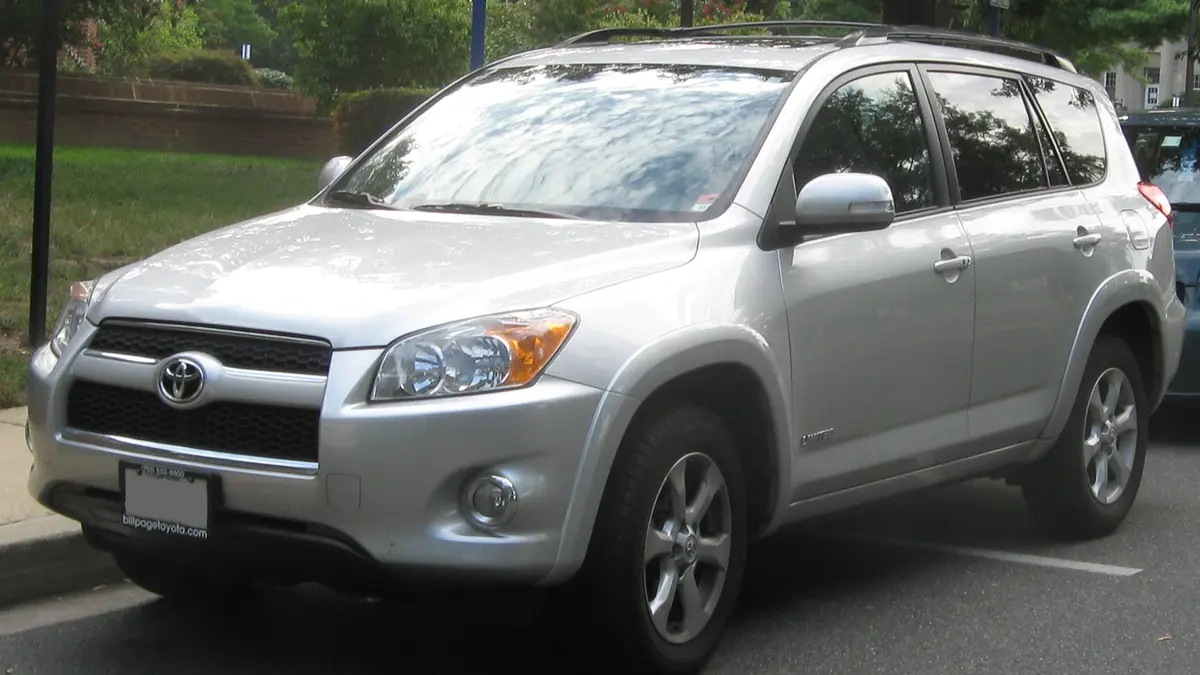
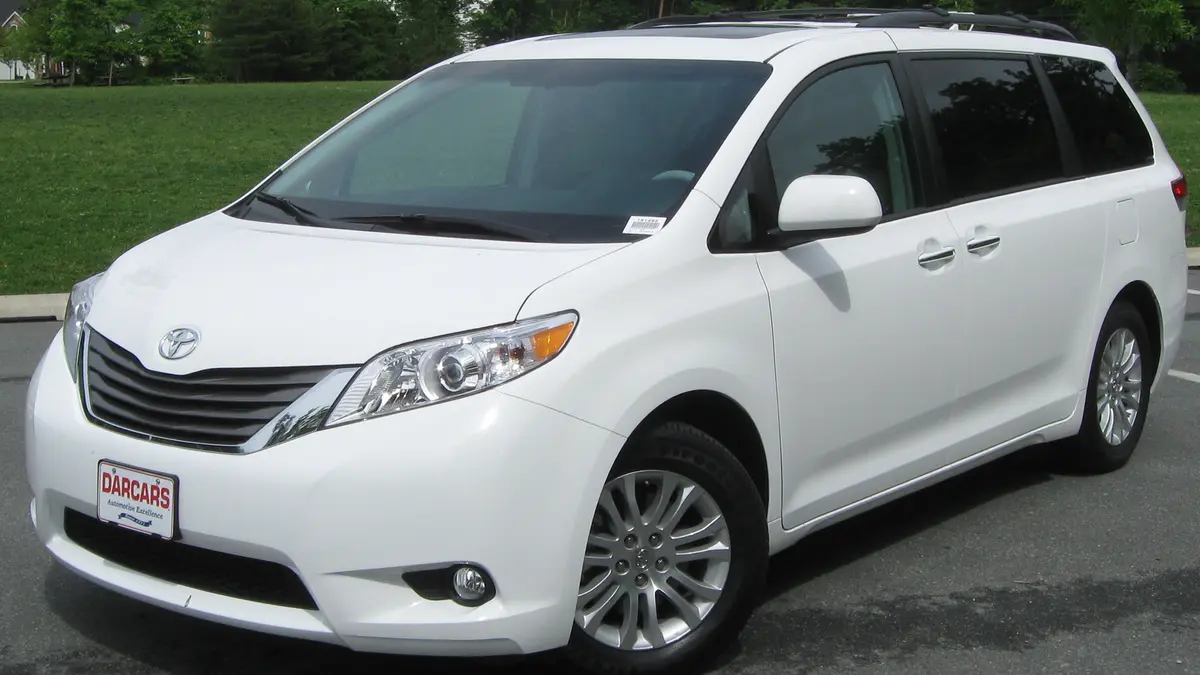
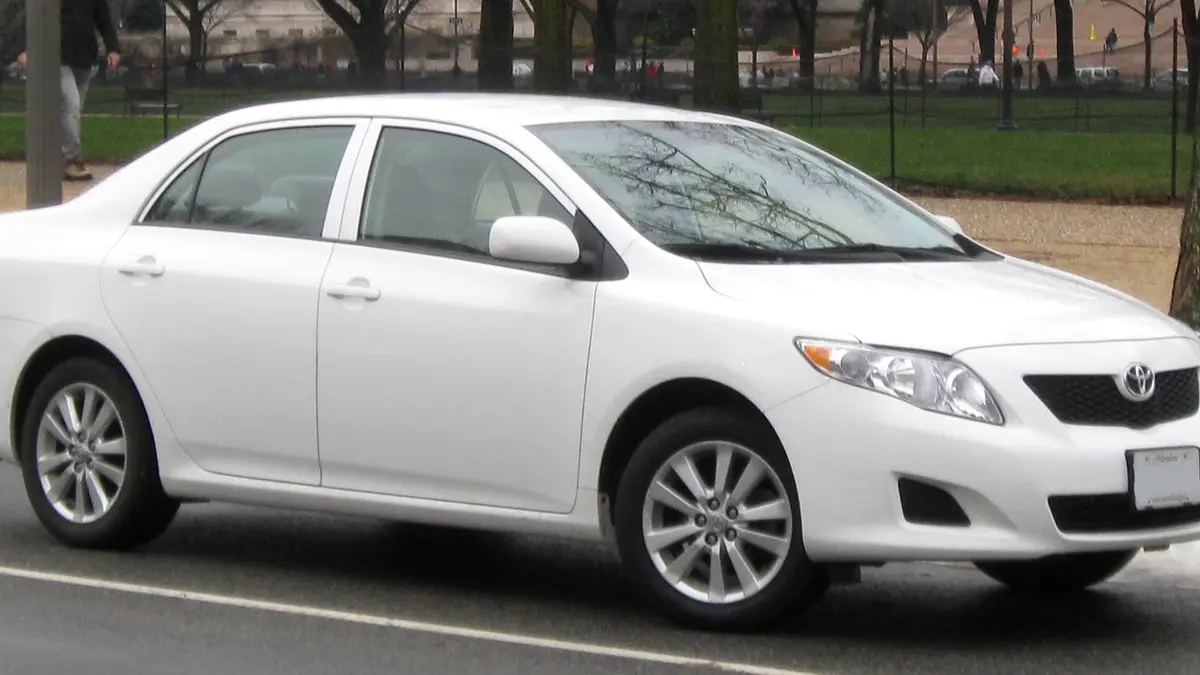
The Camry leads with around 81 cars, typically ₦4.2 million to ₦7 million, usually a 2008. The Corolla follows with about 50 at ₦3.5 million to ₦5.5 million, and the typical one is a 2004. After those, roughly 40 Lexus RX 350s at ₦13.5 million to ₦22 million, then Highlanders, ES 350s and a thin scattering of Accords around ₦3.3 million to ₦5.8 million.
Camry and Corolla being half the list is the right instinct, and not because they are better cars than the Accord. It is that when something goes wrong the part is in Ladipo and any mechanic in Lagos has fixed that exact fault before. On a fifteen-year-old car that matters more than the car does.
One more thing: about one in eight of these is a manual, roughly double the rate across Lagos generally, because the older stock is where manuals survive. If you specifically want one, this is the part of the market that has them.
Worth saying at the end
Buying Nigerian-used in Lagos is not more dangerous than buying tokunbo. It is differently dangerous. The risks here are local and physical rather than buried in an import history, which means they are the sort you can inspect your way out of.
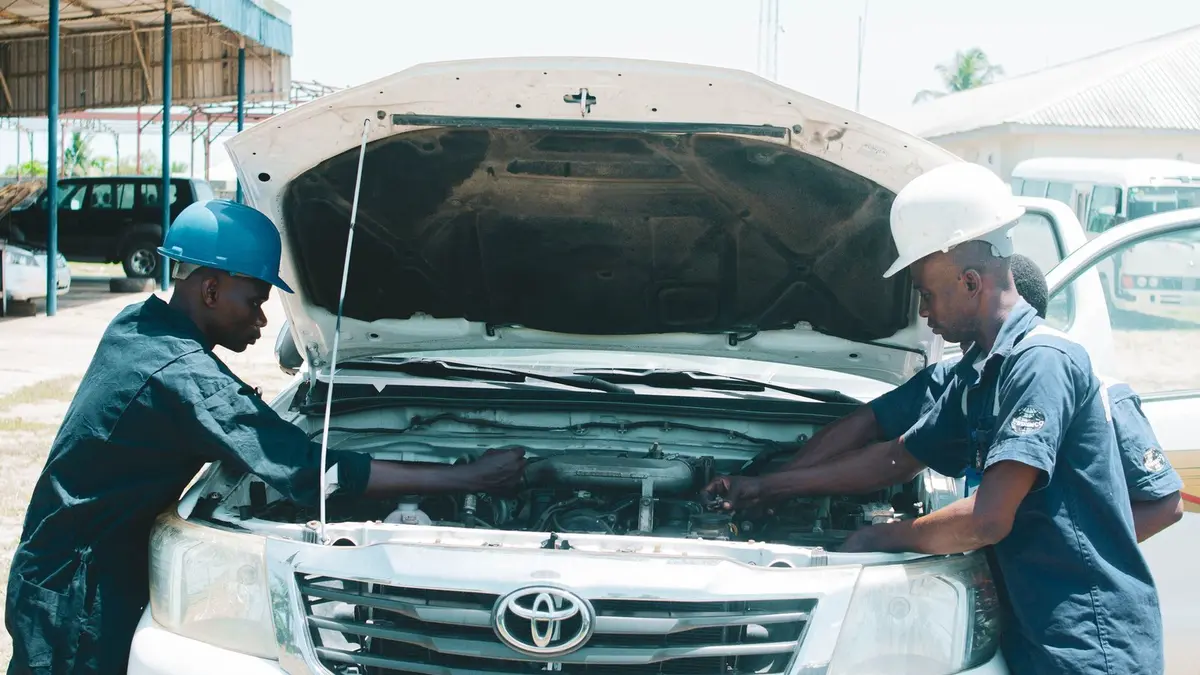
So inspect. Pay a mechanic who works for you, budget twenty to fifty thousand naira for it, and send him before you fall in love with the car. On a five million naira purchase that is one percent, and it is the only percent that reliably pays for itself.
Treat the advert as an advert. The price is a starting point, the photographs were taken on a good day, and the mileage, as we have seen, is often not a number at all.
When you are ready, look through Nigerian-used listings or narrow down to Lagos. For condition grades, budgets and the full checklist, our 2026 buyer's playbook is the place to start.