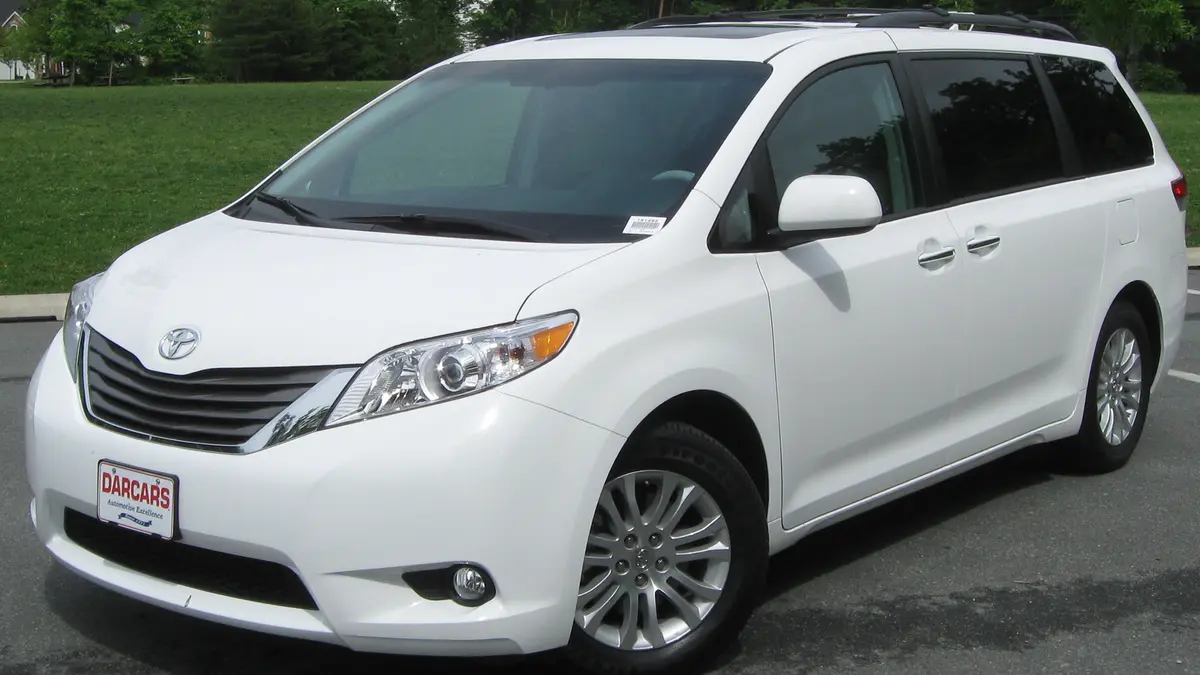
Toyota has never sold the Sienna new in Nigeria. Not once, not through any dealership. So when you see one parked outside a church on a Sunday or lined up for the school run on a Monday, every single one of them arrived the same way: owned somewhere else first, then shipped in.
That single fact changes how you should shop for one. It also means the questions that matter here are not the ones you asked when you last bought a Corolla or a Camry.
Why people end up buying a Sienna instead of an SUV
Nobody sets out to buy a Sienna. Most people get pushed toward one once a Camry, or even a Highlander, stops being big enough.
Eight seats, sometimes seven depending on the configuration, and a cabin that swallows luggage, church instruments, or a week of market shopping without anyone folding their knees into their chest. The sliding doors matter more than they sound like they would. In a tight compound or a packed church car park, swinging a door wide enough to load three children is not always possible. A sliding door solves that without needing the space.
Against a body-on-frame SUV carrying the same number of people, running costs tilt heavily in the Sienna's favour too. Underneath the van body is a car, not a truck, so the fuel bill and the tyre bill both look more like a large sedan's than a Prado's.
Which years to actually look at
Three generations show up on the Nigerian market, and they are not equally worth your money.
2004 to 2010: cheap, but ask about the gearbox first
This generation is where most of the budget buyers end up, and the price reflects it. Before you get attached to one, find out what year it actually is within that range. The early cars in this generation, especially 2004 to 2006, carry a well-known transmission fault on the V6. It can shudder or hesitate on takeoff, and a transmission job on a van this size is not a small bill. A 2008 or 2009 from the same generation is a materially safer bet than a 2004, even though they look identical from the outside.
2011 to 2020: where most buyers should be looking
Bigger inside, more reliable as a generation, and the one I would point most families toward. The eight-seat layout also becomes common from here, which matters if capacity is the actual reason you are shopping rather than style.
2021 onward: hybrid only, and rare here
Toyota stopped making a non-hybrid Sienna after 2020. Hybrid-only Siennas do turn up occasionally, but they are still uncommon on this market. That is worth knowing so a newer-looking Sienna priced like a hybrid does not catch you off guard.
LE, XLE or Limited: what the badge actually buys you
The base LE gets you the seats and the engine and not much else. Manual sliding doors on the cheapest LE trims, cloth seats, and the kind of interior that is built to be cleaned rather than admired.
XLE is the trim most people searching for "Sienna XLE for sale" actually want, and it earns the search. Power sliding doors, leather or leather-trimmed seats, alloy wheels, and usually a sunroof. That is the real difference between a van that works and a van that feels worth what you paid for it.
Limited goes further still, with more of everything XLE has plus the features Toyota reserved for the top of the range in that generation. Finding one is the hard part, and keeping it fully working is the expensive part: every extra motor and module is one more thing that can eventually fail.
One more trim quirk before you commit: some years offer the Sienna with all-wheel drive on the V6. It helps on bad roads and in the rain, but it is also a drivetrain component most roadside mechanics in Nigeria have barely touched. A front-wheel-drive Sienna is the easier car to keep running here, not because AWD is unreliable, but because fewer people locally are confident servicing it.
The sliding doors are the part that actually breaks
Ask anyone who has owned a power-sliding-door Sienna for a few years what their first complaint was, and it is usually the doors, not the engine.
The motor and cable system that opens and closes them wears out faster than people expect, especially on vans that spent years doing airport runs or ferrying church groups rather than one family's school commute. A door that hesitates, grinds, or needs a shove to close all the way is telling you it has done a lot of work already.
Test both doors yourself, several times, with the engine running and off. Listen for grinding rather than a smooth motor hum. If a seller tells you "it just needs oiling," treat that the way you would treat any other excuse for a fault you can hear.
Nigerian used or tokunbo? There is barely a question here
On almost every other car in this market, that is the first real decision a buyer makes. On the Sienna, it mostly answers itself. Because Toyota never sold it new in Nigeria, there is no local first-owner history to buy into, and what people loosely call "Nigerian used" here usually just means a tokunbo Sienna that has already changed hands once inside the country.
What you are really choosing between is a van that spent its working life as a private family car in America, and one that spent part of its life in commercial service, whether that was a shuttle, a hotel run, or a church fleet. Ask directly what the van was used for before it was shipped. The answer usually explains the seat wear and the mileage better than the odometer does.
If you would rather deal with the person who actually owns the van than a dealer's asking price, our no-middleman buying guide covers how to find and vet a private seller safely, and it applies just as well to a Sienna as it does to a sedan.
What else to check before you pay
Beyond the doors and the gearbox, a Sienna has a few checks that are specific to it rather than generic to any used car.
- Drive it and brake hard once, safely. A loaded van brakes differently from a sedan. If it pulls or shudders under braking, budget for that before anything else.
- Smell the cabin. A van that spent years shuttling people carries that history in the upholstery. A strong odour you cannot place is worth walking away from, not spraying over.
- Check both sliding doors and the rear hatch. Covered above, and worth repeating because it is the single most common complaint on this vehicle.
- If it is the AWD V6, ask who last serviced the transfer case. A vague answer here is the clearest sign the previous owner also did not know how to maintain it properly.
- Match the chassis number on the van itself to the one on the papers. This matters on every import, and a van with this much seating is exactly the kind of vehicle that attracts paperwork shortcuts.
The rest of the checklist, cold engine starts, bringing your own mechanic, seeing more than one before you commit, is not Sienna-specific. It is in our 2026 buyer's playbook, and none of it changes just because this one happens to seat eight.
So, should you buy one?
If you actually need the seats and the sliding doors, and you are not trying to talk yourself into a van you do not have the family size for, yes. Aim at 2011 to 2020 if your budget allows it, treat anything from 2004 to 2006 as a transmission check first and a purchase second, and choose XLE over LE if the power doors and leather are worth the difference to you.
It will ask for more than a comparable Corolla and usually less than a Prado of similar age, which is about where a vehicle this size should sit. For the actual current asking prices by year, our 2026 market pricing guide has the wider context, and live Sienna listings will always be more current than any number printed here.
Start with Toyota Sienna listings on CarSpace, or widen the search to tokunbo and Nigerian-used cars generally if a Sienna turns out not to be the right fit once you have seen a few. And if the van sitting in your compound is the one you are ready to let go of, list it here. There is always a church group or a growing family looking for exactly what you are done with.